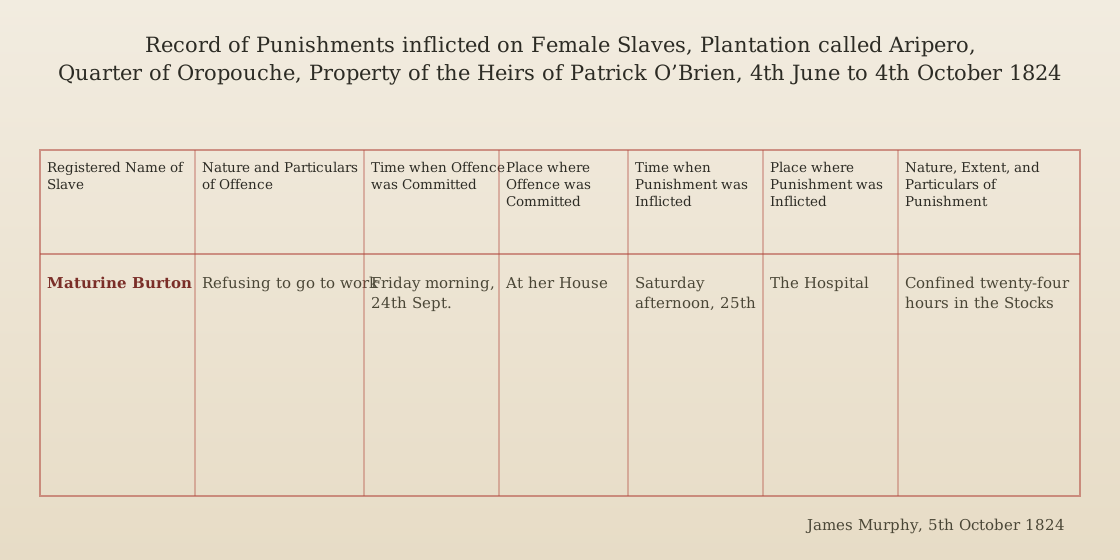
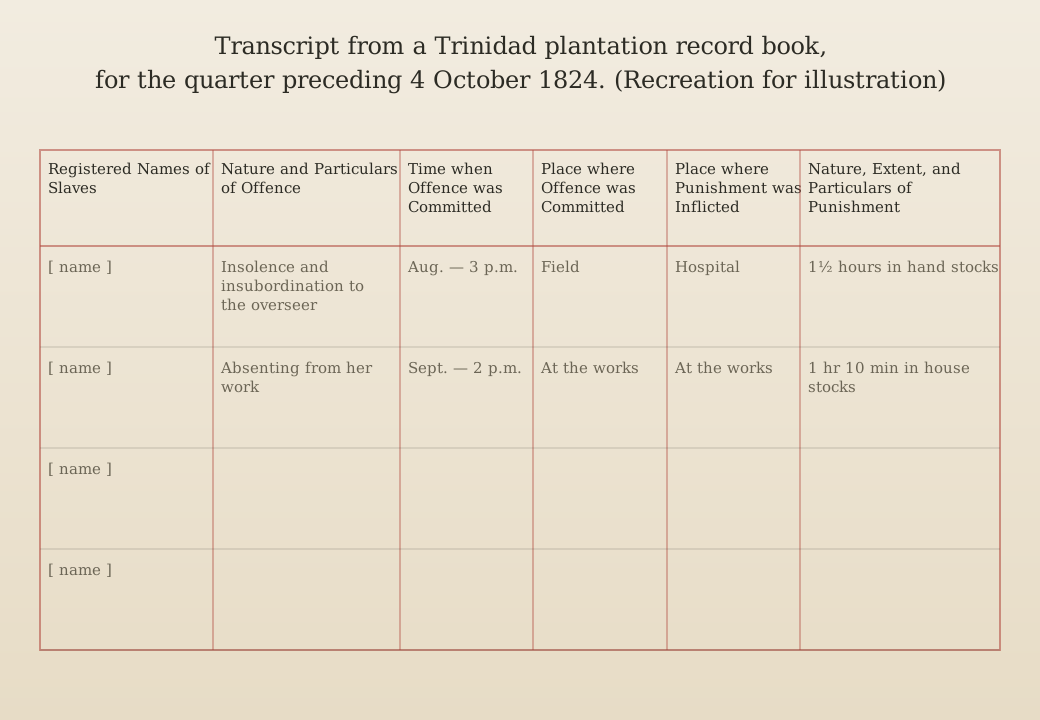
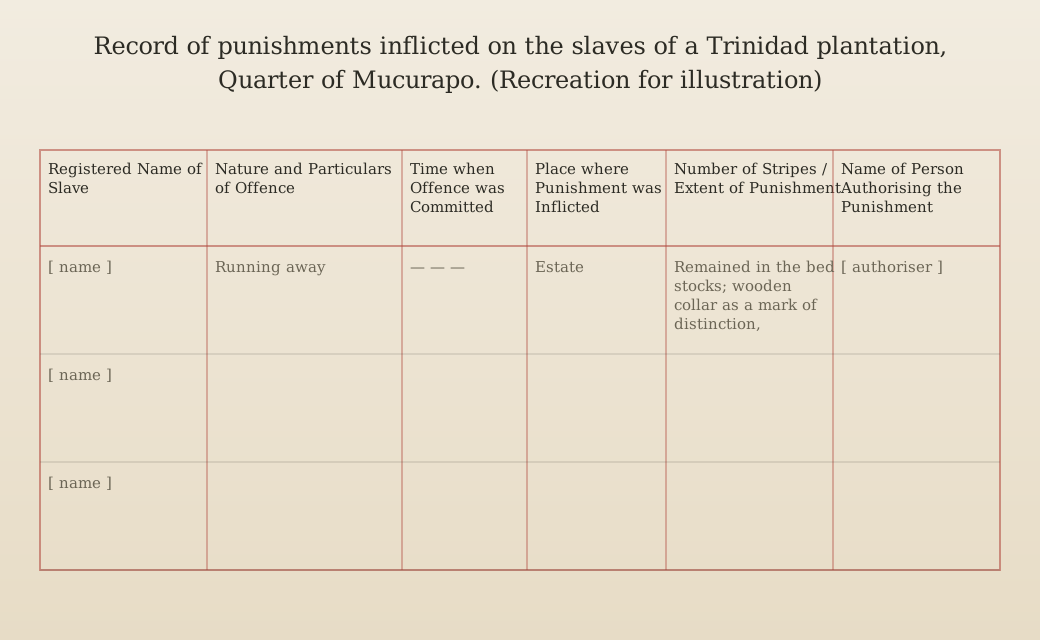
The women at the center of this project survive in records that were never meant to preserve their lives. Records such as a punishment register, a slave register, a plantation account, or a line of colonial correspondence might reduce a woman to a name, an occupation, an estate, an alleged offense, and a punishment.
I begin with those fragments and follow each woman through the surviving record as far as it will carry me: across different years, estates, and registers, searching for her family, her movements, and her skills. Sometimes the records let me follow a woman for years. More often, they leave a few lines that reveal little about who she was.
The method rests on one rule: I will not invent a life where the record is silent.
So, for each woman, I separate three things and never let them blur.
What the record documents
This is what surviving primary sources state directly.
What the evidence allows me to infer
What context and cross-referenced records make reasonable. When I infer, I say so, rather than letting an inference pass as fact.
What we cannot know
The archive has limits, and I do not fill them with invention.
This discipline matters most when reading records made by enslavers. For example, a punishment record from an 1824 estate names a woman and describes her offense as “insolence and insubordination” or “absenting from her work,” and then records the hours she spent in the stocks. It preserves the accusation and the punishment. It does not preserve the enslaved woman’s point of view. The language of the archive must be read in the context of the time period and the enslaver-enslaved power dynamic, rather than repeated as an absolute condemnation of the enslaved.
Reading across records is how a woman becomes more than the moment that condemned her. The same woman recorded once for an offense may appear elsewhere as a mother, a nurse, a field laborer, an artisan, part of a community the register never mentions. Those other records are where the enslaved woman’s life begins to reassemble.
The aim is not to romanticize these women, and not to inflate a fragment into a full biography. It is to recover what can still be recovered.
Every episode asks one question: who was this woman, beyond the moment the colonial system chose to write her down?
When the archive answers, I follow the answer. When it gives only pieces, I hold onto the pieces, and I name her.